The best tools to get the job done for humanitarian work
Designing and improving water supply for communities that need it most deserves capable, affordable tools. epanet-js gives humanitarian teams professional modeling that runs anywhere.
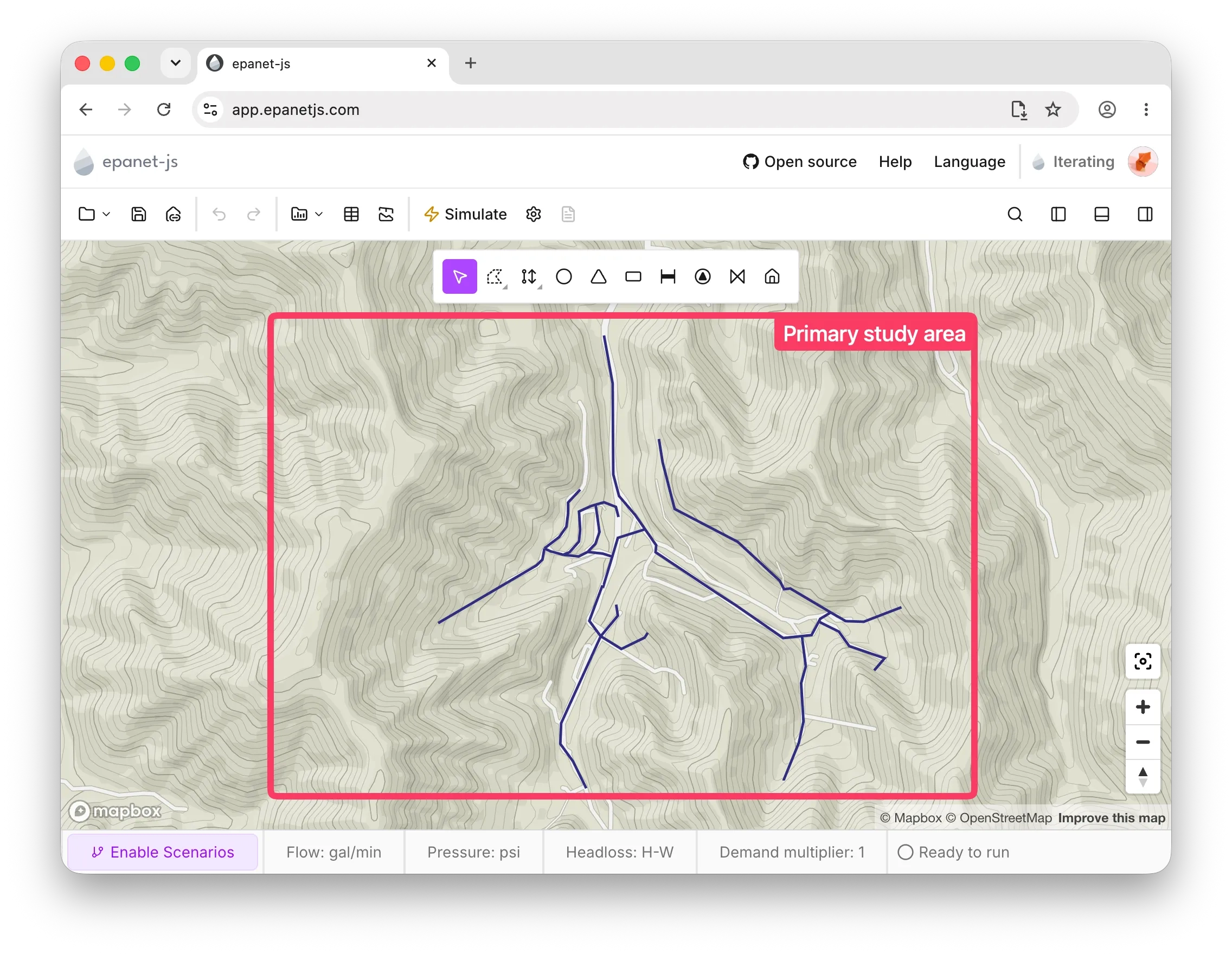
Designing and improving water supply for communities that need it most deserves capable, affordable tools. epanet-js gives humanitarian teams professional modeling that runs anywhere.
Used by humanitarian and water-access organizations





Commercial modeling software can cost more than an entire project budget, which puts professional hydraulic analysis out of reach for exactly the work where it matters most. Too often the choice is between expensive licenses and going without a proper model at all.
epanet-js is built to close that gap: professional-grade modeling on the trusted EPANET engine, affordable and often free, light enough to run in the field, so your resources reach the communities you serve.
Humanitarian water work rarely happens in a comfortable office with a powerful workstation. epanet-js runs on modest hardware, so you can build and run real hydraulic models wherever the work takes you, on whatever operating system you have to hand.
The app loads once, then runs and saves on your machine, so any laptop and a modest connection are enough to get to results.
If you've worked with EPANET, you'll feel right at home. epanet-js runs the exact engine you already trust, but replaces the friction and workarounds of the legacy interface with a fast, modern workspace. You get the familiar hydraulic behavior without the tedious setup hurdles, and with fair pricing and a free tier, your budget stays focused on the project rather than software licensing.
Flow (l/s)
Whether you import field survey data or sketch out lines over satellite maps, getting a layout into the model is straightforward. The software runs on the proven EPANET 2.3 engine so you can test pipe sizing, check tank levels, and confirm your design will consistently deliver water where people need it.
Drawing pipe P-12
Click to add a junction
epanet-js runs local-first: simulations and project files stay on your computer, never touching our servers. There is no vendor lock-in, either. You can work with standard .inp files or our open format, and our source code is public from day one (transitioning to fully open source after two years).
Handing models over to local teams or community partners is hassle-free because they'll never need an expensive license to open your work.
Affordable, with free options, so more of your funding goes to the communities you serve, not software.
Browser-based and lightweight. Run it on modest hardware in the field, on any operating system.
No installs or IT infrastructure. Open a browser and start modeling to get to results quickly.
The same trusted EPANET engine and modern workflows the industry relies on, not a stripped-down version.
Tell us about your project and we'd love to help you get set up.
epanet-js exists because good water modeling shouldn't be limited by cost. It's built in the open, sustained by fair pricing rather than locked-away improvements, with the explicit goal of putting capable tools in the hands of more engineers, utilities, and teams, including those doing the hardest, least-funded work.
The jobs epanet-js helps you get done in the field.
The questions humanitarian and NGO teams ask most.
Tell us about your humanitarian water work and we'd love to help, or launch epanet-js free and start right now.